Flat and low-slope roofs
Flat and low-slope roofs in Los Angeles
Most apartment roofs in the county are flat or nearly flat. We find the ponding and the open seams before they reach the unit below, then re-cap or coat the section that needs it.
The building visit is free. Your file starts that day, with photos of your roof.
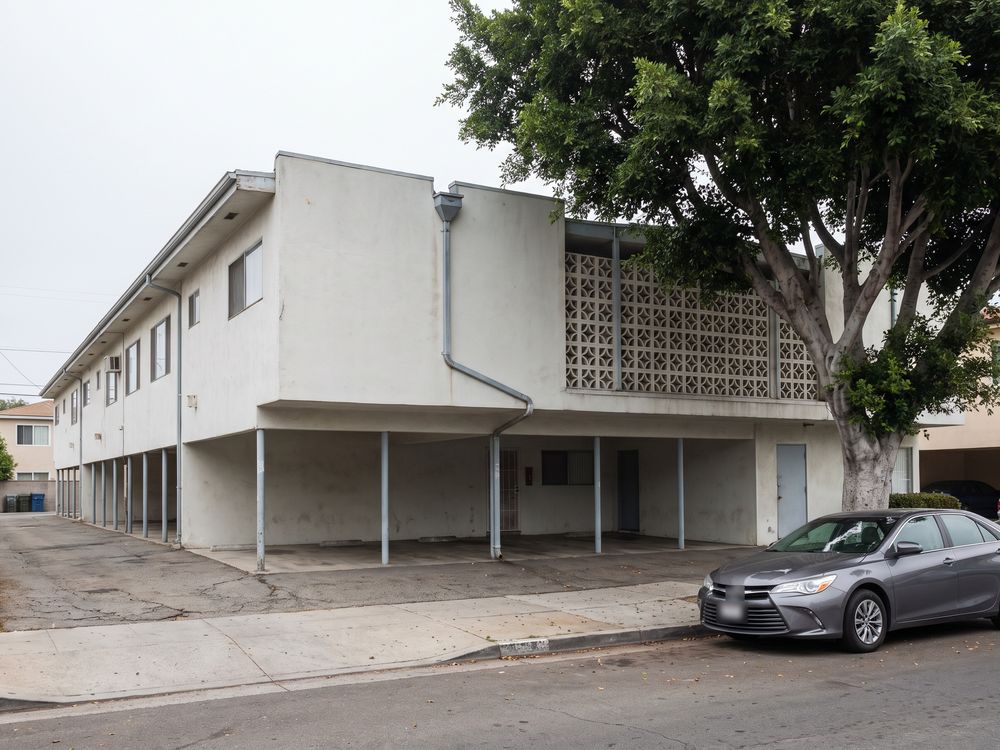
On a flat roof, the water has to find its own way to a drain. Most of what goes wrong happens where that path is broken: at a parapet, a drain, a curb or a seam. The open middle of the roof usually outlasts its edges.
What we find on flat roofs here
- Water standing around a drain whose strainer is packed with leaves
- Seams lifting where the cap sheet turns up the parapet
- Blisters, and a surface gone brittle and gray where the granules have worn away
- Soft spots underfoot over wet felt
- Open joints in the coping along the top of a parapet
- A stain on the ceiling of a top-floor unit or a stairwell below
Re-cap, torch-down or coating
Which one a section gets depends on what is under its surface, and the scope names it section by section.
- Re-cap. New cap sheet over a base that is still dry and sound, for a surface that has worn out.
- Torch-down. Modified bitumen sheets heat-welded over a new base once the old roof is off. It stands up well to foot traffic around rooftop units.
- Coating. A coating extends the life of a sound, dry surface. It cannot dry out wet felt, so wet areas are cut out and patched before anything is coated.
One building can need two answers. A rear block in poor shape and a front wing with years left are priced as separate sections, so one can go ahead this year without the other.
What the visit checks
The visit is free and takes about 45 minutes a roof. On a flat roof we walk every section and look at:
- Each drain and scupper, and the strainer on it
- The seams, and the inside corners where the roofing turns up a wall
- The coping and the stucco at the top of each parapet
- The curbs under rooftop units, the vent pipes and the roof hatch
- Ponding lines left by water that sat and dried
- The top-floor ceilings below, where we can get in
Before the day is out, each finding is a numbered pin on the plan of your roof, with its photo. The scope that follows prices each section on its own.
What decides the price on a flat roof
- The area of each section, and how many layers are on it now
- Whether the felt under the surface is dry or wet
- How many drains, scuppers, curbs and vents the roof carries
- Parapet height, the coping, and the stucco where the roofing turns up
- How materials get up: a roof hatch, an outside stair or a lift from the street
What you get
The building's file: the plan with a pin at every drain and seam we worked on, a photo at each one, and a line for anything we left alone and why. The Next column gives the board or the manager a year range for the sections that are wearing but not yet leaking, so the reserve can plan for them.
Questions about flat roofs
Why does water sit on our roof after it rains?
Usually a blocked strainer, a sagging spot in the deck, or a section that was never pitched enough toward its drain. Clearing the strainer fixes the first. The other two need the section rebuilt to drain, sometimes with a cricket, and the scope says which.
Do you work on the flat roof over a house addition?
Yes. The addition is its own section with its own line in the scope, and the join where it meets the main roof is flashed as part of it.
What happens to the units on the roof?
We seal around their curbs and the lines that run to them. Where a unit has to be lifted for the roof under it, the scope shows it before anything is booked.
Can a coating go on any flat roof?
No. A coating needs a sound, dry surface under it. Over wet felt it traps the water, so those areas are cut out first, or the section gets a new roof instead.
Repairs and leaks
Tenant reporting a leak? We come the same day.
Give us the address and the unit. We stop the water that day and tell you, or the tenant, once it has.
Roofs we work on
Every kind of roof in the county, flat ones first.
Start here
Need the roof explained to someone else? We'll write it down.
Four questions about the building, then your ZIP and phone.
- 1Which building is it?
- 2How many units?
- 3Who needs the paperwork?
- 4By when?
The building visit is free. Or call (310) 857-2520.